
Performance-Driven Digital Marketing Agency for Predictable Business Growth
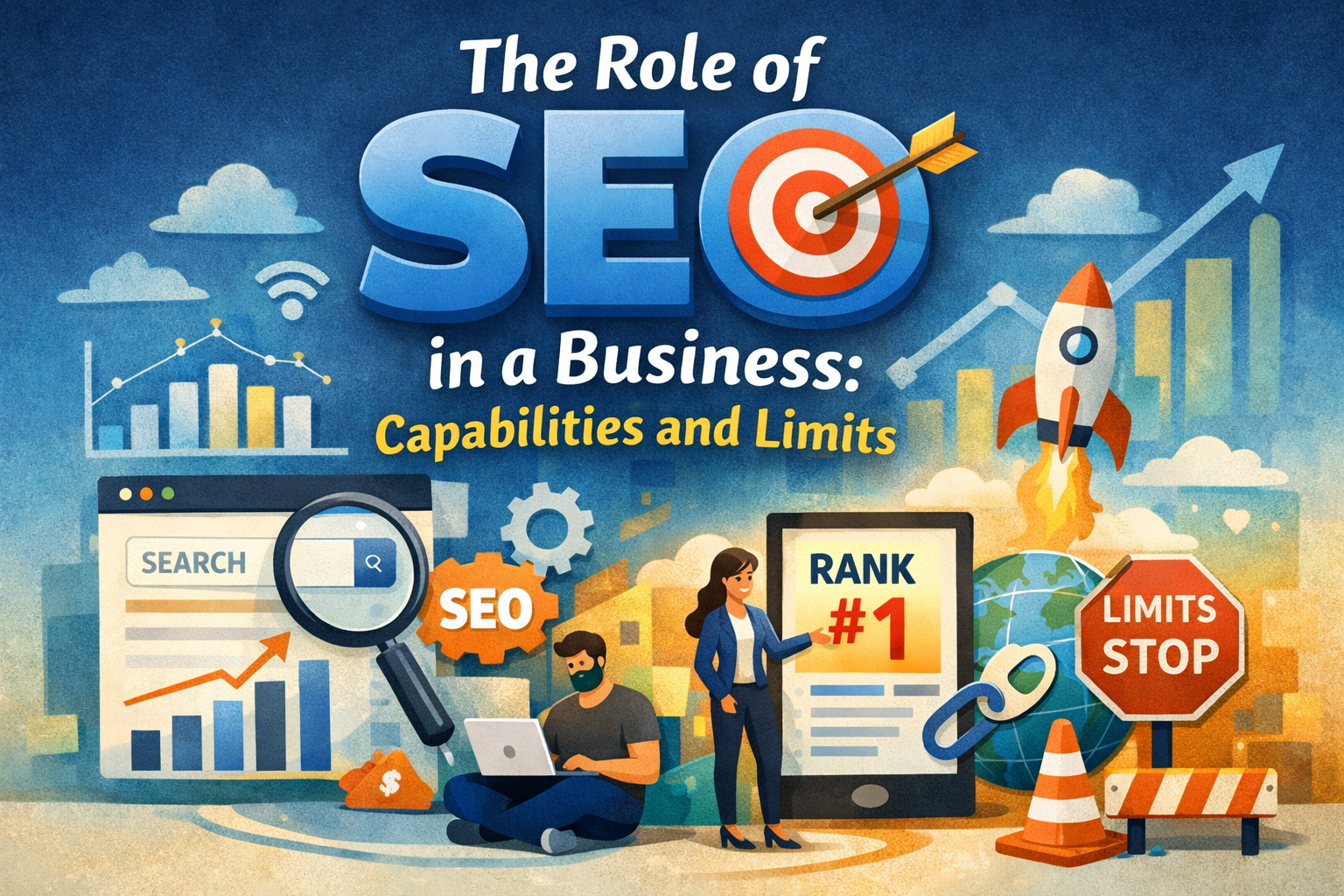
SEO is rarely misunderstood because it’s complicated. It’s misunderstood because it’s rarely framed.
In most organizations, SEO exists as a collection of activities pages, optimizations, reports without a shared understanding of what it is actually responsible for. As long as things look stable, that ambiguity goes unnoticed.
Problems emerge later, when expectations diverge.
At some point, SEO is expected to “drive growth.” At another point, it’s expected to “support content.”
Sometimes it’s meant to reduce paid spend. Other times, it’s treated as brand visibility.
None of these expectations are wrong on their own. The issue is that they’re rarely made explicit — and almost never aligned.
As a result, SEO is evaluated against shifting criteria. When it performs well, credit is diffuse. When it underperforms, accountability is unclear.
This is where frustration begins.
SEO does not create interest where none exists. It aligns the business with demand that already exists and determines how the business appears when that demand surfaces.
Every search represents a moment of evaluation. SEO governs whether the business is present, credible, and coherent in that moment.
When this alignment is strong, SEO feels obvious. When it isn’t, visibility feels hollow.
SEO’s value becomes clearer when its scope is constrained.
At a business level, SEO consistently affects:
When SEO is judged outside these outcomes, confusion is inevitable.
SEO does not correct weak positioning. It does not compensate for unclear offers. And it does not convert demand the business isn’t prepared to serve.
When SEO is expected to solve these issues, it becomes a convenient scapegoat rather than a useful system.
Understanding these limits isn’t pessimistic it’s protective. It prevents misallocation of effort and preserves trust in the channel.
SEO becomes manageable when its role is clearly defined and consistently evaluated. Not every fluctuation needs explanation. Not every initiative needs expansion.
When leaders understand where SEO fits and where it doesn’t it stops feeling ambiguous and starts behaving predictably.
Not because outcomes are guaranteed, but because expectations are aligned.