Performance-Driven Digital Marketing Agency for Predictable Business Growth
Ranking Pages Worth Ranking
Most organizations don’t struggle to get pages indexed or ranked. They struggle to make those pages influence decisions once they’re visible.
Our on-page SEO work ensures the pages capturing search demand are the same pages capable of converting that demand into qualified leads, pipeline, and revenue.

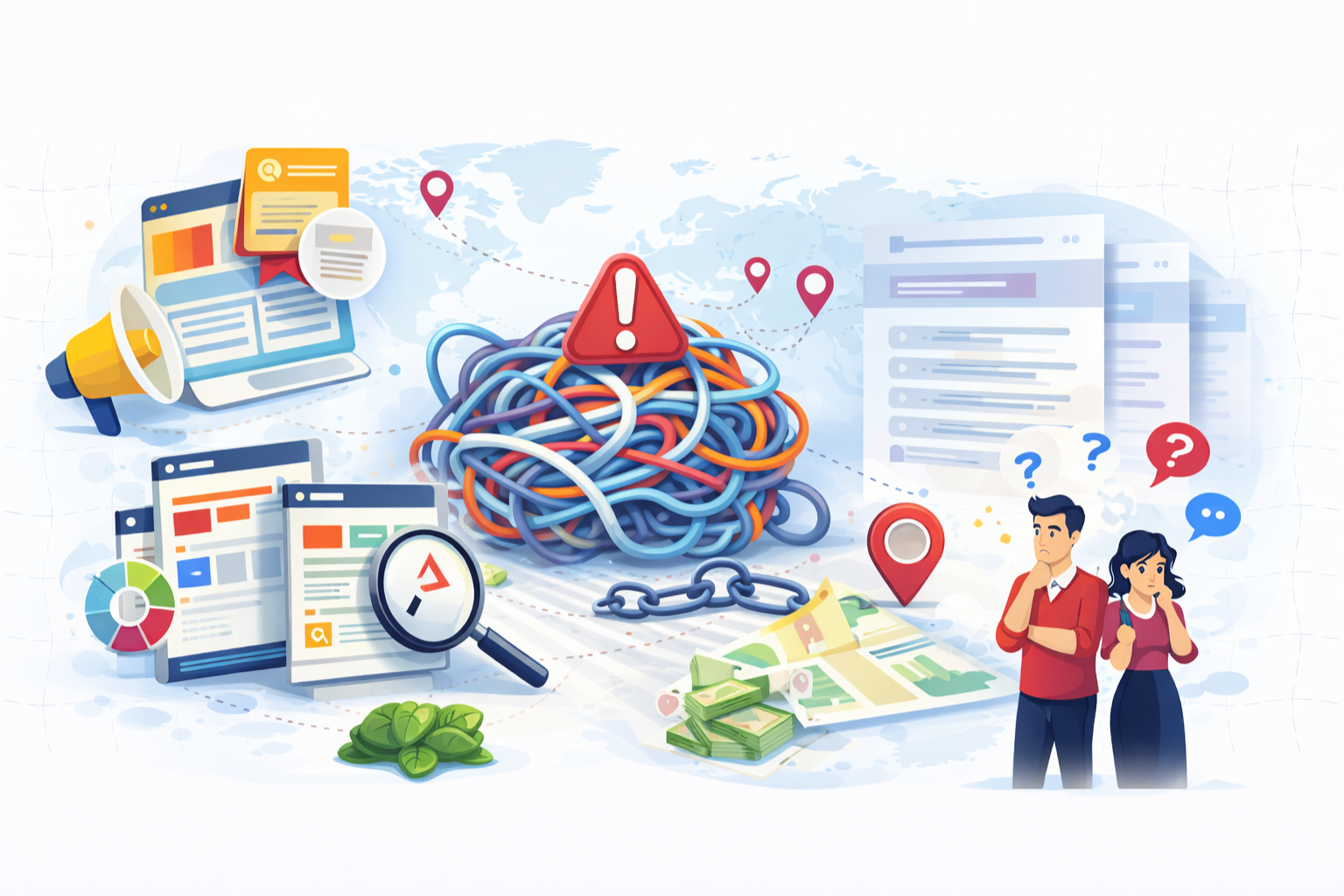
We isolate searches that signal genuine buying behavior, not passive informational interest.
We determine which pages directly influence conversions, revenue, and strategic business decisions.
Each intent is owned by one primary page, supported by clearly defined secondary pages.
Some pages are strengthened, others consolidated, and some intentionally left unchanged.
Focused optimization compounds authority, while excess optimization diffuses momentum and impact.
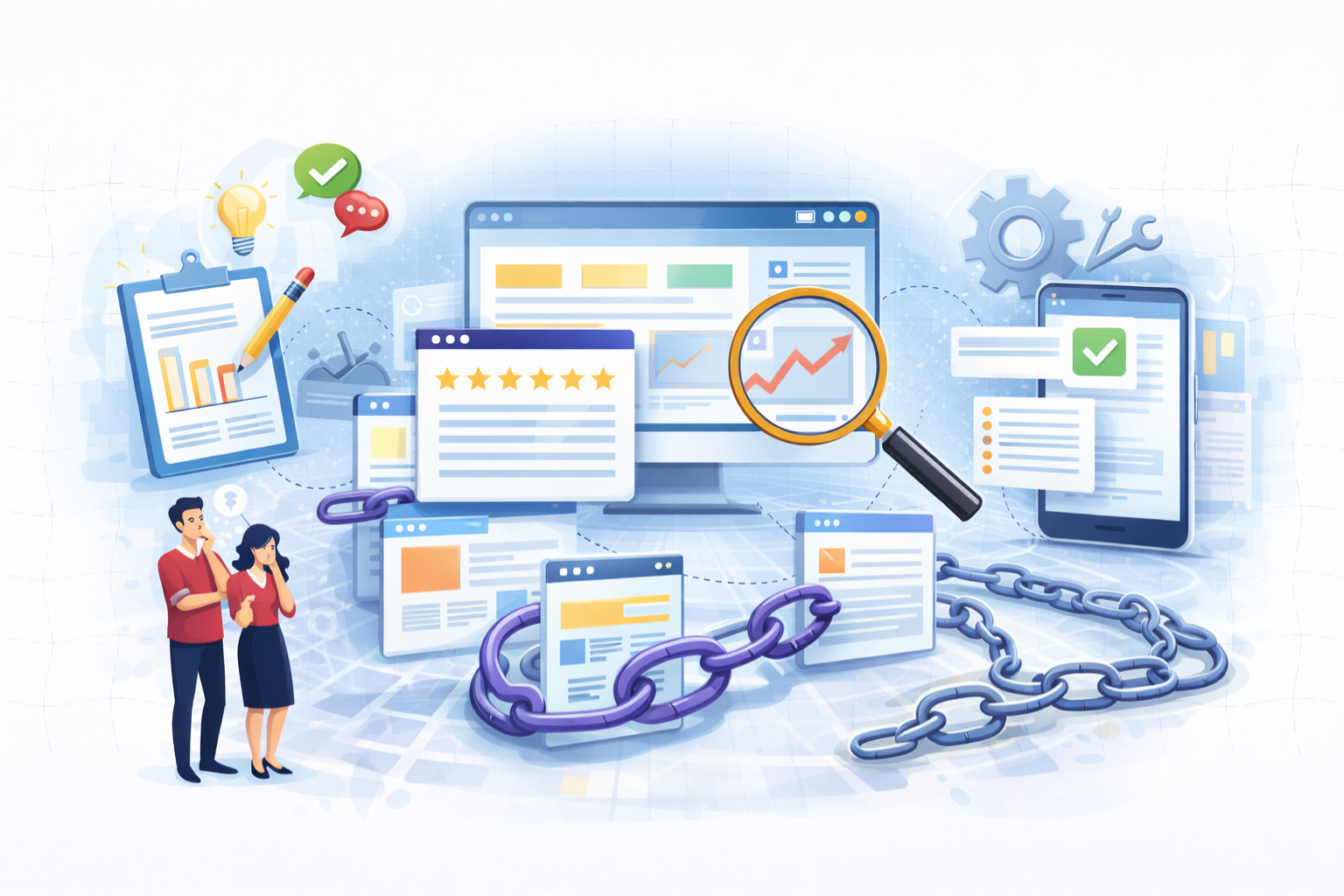
1. Clarity Improves
Pages become more decisive as intent is clearly defined and owned.
2. Performance Stabilizes
Rankings settle as search intent is consistently satisfied.
3. Traffic Qualifies
Internal competition fades and traffic aligns with business value.
4. Outcomes Align
Results become easier to explain because effort maps directly to impact.
On-page SEO is the process of aligning content, structure, and signals on a page to satisfy search intent and support consistent rankings. Effective on-page SEO focuses on clarity, ownership, and outcomes—not checklists.
On-page SEO directly influences how search engines interpret relevance and intent. When on-page SEO is applied correctly, rankings stabilize and performance becomes more predictable.
On-page SEO determines what a page communicates and why it should rank, while technical SEO ensures the page can be crawled and indexed efficiently.
A disciplined on-page SEO strategy assigns one primary intent per page, supported by related terms that reinforce—not compete with—that intent.
Yes. Strategic on-page SEO often unlocks existing authority by clarifying intent, consolidating pages, and improving internal relevance signals.
On-page SEO performance weakens when multiple pages target the same intent, creating internal competition and diluted authority.
Internal linking strengthens on-page SEO by reinforcing hierarchy, signaling intent ownership, and guiding authority toward priority pages.
No. Effective on-page SEO relies on restraint. Some pages are optimized, some are consolidated, and others are intentionally left untouched.
Initial on-page SEO improvements may appear within weeks, while sustained gains typically stabilize over several months.
Successful on-page SEO is reflected in ranking stability, improved traffic quality, reduced cannibalization, and clearer alignment with business outcomes.